

Global Thermoplastic Copolyester Elastomers Market: Mexico High-Growth Hub Led by BASF, DuPont, Evonik
Automotive electrification, medical device expansion, and cost-efficient manufacturing position Mexico as a strategic growth engine through 2036
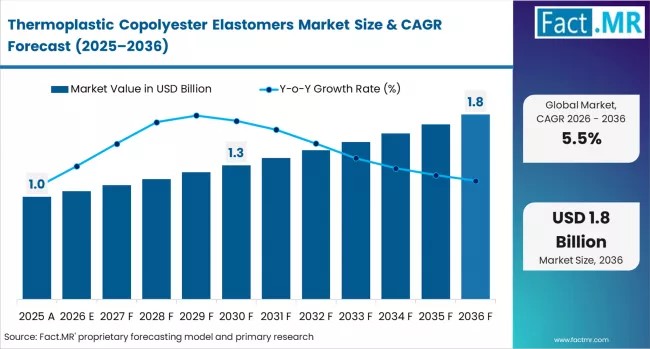
ROCKVILLE, MD, UNITED STATES, April 15, 2026 /EINPresswire.com/ -- The Mexico thermoplastic copolyester elastomers (TPC-E) market is gaining strategic importance within the global landscape, as the industry evolves from a USD 1.05 billion market in 2026 toward USD 1.80 billion by 2036, expanding at a CAGR of 5.50%.Mexico is expected to register a 5.7% CAGR through 2036, outpacing several mature economies due to its automotive manufacturing base, nearshoring advantage, and expanding medical device production. The incremental global opportunity of USD 0.75 billion is increasingly being captured by emerging manufacturing hubs like Mexico.
The market transformation is driven by:
Shift from thermoset rubber to recyclable TPC-E
Electrification of vehicles increasing elastomer demand per unit
Demand for biocompatible and high-performance materials
Mexico’s role is evolving from a cost-driven manufacturing hub to a value-added production and processing center.
Get detailed market forecasts, competitive benchmarking, and pricing trends: https://www.factmr.com/connectus/sample?flag=S&rep_id=2479
Quick Stats Section
Market Size (2026): USD 1.05 Billion (Global)
Market Size (2027 est.): USD 1.10 Billion
Forecast Value (2036): USD 1.80 Billion
CAGR (2026–2036): 5.50%
Mexico CAGR: 5.7%
Incremental Opportunity: USD 0.75 Billion
Leading Segment: Automotive Applications (41%)
Leading Region: North America (Mexico as growth engine)
Key Players: BASF, DuPont, Evonik, Mitsubishi Chemical, Avient
Executive Insight for Decision Makers
Mexico’s TPC-E market is undergoing a strategic shift from low-cost processing to integrated manufacturing ecosystems.
What stakeholders must do:
Secure long-term supply contracts with automotive Tier-1 suppliers
Invest in high-performance and flame-retardant TPC-E grades
Develop localized compounding and technical support capabilities
Risks of inaction:
Supply chain dependency on imports
Loss of OEM contracts due to lack of certification (UL, ISO 10993)
Margin pressure from commoditized elastomer substitutes
Market Dynamics
Key Growth Drivers
Automotive electrification: Increased use in EV cable jacketing and connectors
Nearshoring trend: OEMs shifting production to Mexico
Medical manufacturing growth: Rising demand for biocompatible elastomers
Rubber replacement: TPC-E replacing EPDM in automotive systems
Key Restraints
High material and processing costs
Competition from TPU and silicone elastomers
Limited domestic polymerization capacity
Emerging Trends
Bio-based and recyclable TPC-E materials
Smart elastomers with adaptive properties
Integration with automated injection molding systems
Localization of compounding facilities
Segment Analysis
Leading Segment:
Automotive applications dominate with 41% market share, driven by demand for lightweight, flexible, and heat-resistant materials.
Leading Grade:
Hard TPC-E holds 44% share, used in high-stress applications like air ducts and cable insulation.
Fastest-Growing Segment:
Medical devices, fueled by exports and regulatory alignment with U.S. standards.
Breakdown
By Grade:Hard (44%), Soft (36%), Modified (20%)
By Application: Automotive (41%), Electronics (31%), Medical (28%)
By Processing: Injection molding (62%), Extrusion (22%), Blow molding (16%)
Strategic Importance:
Automotive and EV-linked applications offer long-term contract visibility, while medical segments provide high-margin opportunities.
Supply Chain Analysis (Very Important)
Value Chain Structure
Raw Material Suppliers
Petrochemical companies producing polyester and polyether feedstocks
Polymer Producers
Global firms like BASF, DuPont, and Evonik manufacture base TPC-E resins
Compounders & Processors (Mexico)
Local players modify materials for specific applications
Injection molding and extrusion companies produce components
Distributors
Regional distributors supply OEMs and Tier-1 suppliers
End-Users
Automotive OEMs (cable harnesses, air ducts)
Medical device manufacturers
Consumer electronics firms
Who Supplies Whom
Global producers → Mexican compounders → Tier-1 suppliers → OEMs
Mexico acts as a processing and integration hub, importing base polymers and exporting finished components.
Pricing Trends
Commodity vs Premium:
Standard TPC-E grades face pricing pressure, while specialty grades command premium margins
Key Price Influencers:
Feedstock costs (oil derivatives)
Certification requirements (UL, ISO)
Demand from EV and medical sectors
Margin Insights:
Commodity grades: 10–15% margins
Specialty grades: 20–30% margins
Regional Analysis
Top Countries by CAGR (2026–2036)
United States – 6.0%
Mexico – 5.7%
Germany – 5.2%
France – 5.1%
United Kingdom – 4.9%
Why Mexico is Growing
Strong automotive manufacturing base (Tijuana, Monterrey, Puebla)
Proximity to U.S. supply chains
Cost-competitive labor and production
Developed vs Emerging
Developed markets: Innovation-driven demand
Mexico: Cost + scale + proximity advantage
Competitive Landscape
Market Structure: Moderately consolidated
Top 5 players hold over 50% share
Key Players
BASF
DuPont
Evonik
Mitsubishi Chemical
Avient
RTP Company
Kuraray
Competitive Strategies
Product innovation (flame-retardant, biocompatible grades)
Strategic partnerships with OEMs
Expansion of regional compounding facilities
Value-added technical services
Strategic Takeaways
For Manufacturers
Invest in localized production and compounding
Focus on EV and medical-grade materials
For Investors
Target companies aligned with nearshoring and EV supply chains
Prioritize high-margin specialty elastomers
For Distributors
Build technical support capabilities
Strengthen relationships with Tier-1 suppliers
Future Outlook
Mexico’s TPC-E market is set to transition into a high-value manufacturing ecosystem.
Key trends shaping the future:
EV adoption increasing elastomer demand per vehicle
Sustainability driving recyclable material adoption
Automation enhancing processing efficiency
The country is expected to become a critical node in North American elastomer supply chains.
Conclusion
Mexico’s thermoplastic copolyester elastomers market is no longer a peripheral player—it is emerging as a strategic growth engine within the global value chain.
Driven by automotive electrification, medical innovation, and nearshoring, the market presents significant opportunities for manufacturers, investors, and suppliers willing to adapt.
Why This Market Matters
TPC-E materials sit at the intersection of mobility, healthcare, and sustainability—three of the most transformative global megatrends.
Mexico’s rise in this space signals a broader shift toward regionalized, resilient, and high-performance material ecosystems, making it a market that decision-makers cannot afford to overlook.
Unlock 360° insights for strategic decision making and investment planning: https://www.factmr.com/checkout/2479
To View Related Report:
Thermoplastic Vulcanizates (TPV) Market https://www.factmr.com/report/thermoplastic-vulcanizates-tpv-market
Thermoplastic Elastomer Market https://www.factmr.com/report/thermoplastic-elastomers-market
Thermoplastic Polyimide Market https://www.factmr.com/report/1811/thermoplastic-polyimide-market
Thermoplastic Polyolefins Market https://www.factmr.com/report/thermoplastic-polyolefins-market
About Fact.MR
Fact.MR is a global market research and consulting firm, trusted by Fortune 500 companies and emerging businesses for reliable insights and strategic intelligence. With a presence across the U.S., UK, India, and Dubai, we deliver data-driven research and tailored consulting solutions across 30+ industries and 1,000+ markets. Backed by deep expertise and advanced analytics, Fact.MR helps organizations uncover opportunities, reduce risks, and make informed decisions for sustainable growth.
S. N. Jha
Fact.MR
+ +1 628-251-1583
sales@factmr.com
Legal Disclaimer:
EIN Presswire provides this news content "as is" without warranty of any kind. We do not accept any responsibility or liability for the accuracy, content, images, videos, licenses, completeness, legality, or reliability of the information contained in this article. If you have any complaints or copyright issues related to this article, kindly contact the author above.
